
Last Updated on 1 year ago by Sundial Admin
By Brighton chiropractor Matthew Bennett
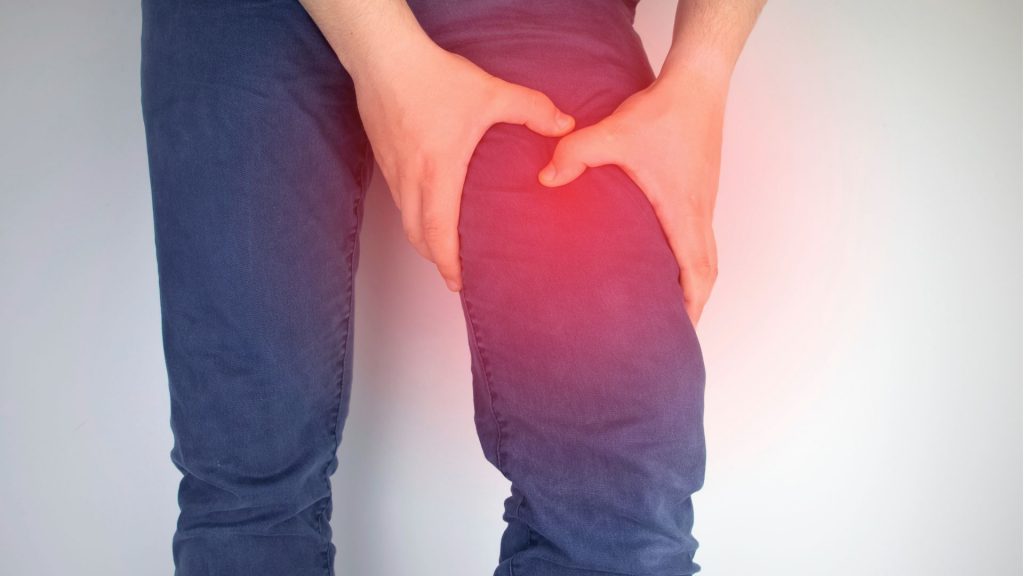 Did you know that thigh pain affects millions of individuals each year, often leading to decreased mobility and quality of life? Understanding the roots of this discomfort is crucial for effective treatment.
In this blog, we’ll explore the possible causes of thigh pain, including referred pain from the back, spinal facet joint dysfunction, sacroiliac joint dysfunction, gluteal muscle spasm, osteoarthritis of the hip, thigh muscle strain and nerve compression.
If that sounds complicated, don’t worry because our expert team at Sundial Clinics are here to diagnose the problems accurately and set you on a path toward recovery.
What Is Thigh Pain?
Thigh pain, or discomfort in the thigh region, can stem from various sources, ranging from muscle strains to serious underlying conditions. Read on to find out some of the common causes of thigh pain.
- Referred Pain from the Back: sometimes, thigh pain does not originate from the leg but instead results from issues in the lower spine. Conditions like spinal facet joint dysfunction can irritate nerves that extend into the thigh and cause significant discomfort. At Sundial Clinics in Brighton, our professionals can perform specialised assessments to check if your pain is due to spinal issues.
- Sacroiliac Joint Dysfunction: the sacroiliac joint connects the lower spine with the pelvis. Dysfunction in this area can lead to pain radiating into the thigh. You may notice discomfort during specific movements or after long periods of sitting. Physiotherapy is a great help in relieving this sort of pain through targeted rehabilitation, while chiropractic treatment can help unlock stiff joints.
- Gluteal Muscle Spasm: tightness or spasms in gluteal muscles can cause referred pain that manifests in the thigh. This often stems from prolonged sitting, lack of activity, poor posture or muscle imbalances. It can also result from overuse in sport, past injuries or as a response to nearby issues (like sciatica or sacroiliac joint dysfunction). Tight glutes may develop as the body compensates or protects other stressed areas. The gluteal region plays a crucial role in stabilising the hip and pelvis so it needs expert attention if pain here becomes a problem.
- Osteoarthritis of the Hip: osteoarthritis is a degenerative joint condition that can affect the hip, leading to referred pain in the thigh. Patients typically experience stiffness, swelling and decreased range of motion. Early detection and intervention are key in managing osteoarthritis, and our team is skilled at developing personalised care plans to optimise your joint health. This can include hip mobilisation, strengthening exercises and advice.
- Meralgia Paraesthetica: this condition typically arises from compression of the lateral femoral cutaneous nerve as it comes through the pelvis into the thigh, leading to tingling, numbness and pain on the outer thigh. It can be triggered by tight clothing, weight gain or prolonged standing. Treatment plans often involve addressing the compressive factors and strengthening surrounding muscle groups.
- Thigh Muscle Strains: injuries to the quadriceps or hamstring can occur during sports activities, resulting in pain, swelling and reduced mobility. Thigh pain from overuse often occurs in sports like running, football, cycling or sprinting. Repetitive strain, sudden acceleration or poor warm-up can lead to muscle strains, particularly in the quadriceps or hamstrings. Overtraining without proper recovery is also a common cause. Understanding how to rehabilitate these muscles correctly is essential for a full recovery.
Diagnostic Approaches
As you can see, identifying the specific cause of your thigh pain is vital. At Sundial Clinics, we utilise a comprehensive approach to diagnostics, which includes:
- Physical Examination: our skilled practitioners begin with a physical exam, assessing movement quality and identifying any pain triggers.
- Patient History: understanding your lifestyle, previous injuries and other relevant medical history provides context to your condition.
- Imaging: in some cases, imaging studies such as X-rays or MRIs may be necessary to examine internal structures. Your practitioner will let you know if this is appropriate.
- Functional Assessment: we’ll evaluate your strength and flexibility to identify weaknesses or imbalances causing your pain.
Effective Treatment Strategies
Once we diagnose the underlying cause, we’ll design a personalised treatment plan tailored to addressing your unique needs. This might include some or all of the following:
- Chiropractic Adjustments: our chiropractors can perform spinal adjustments to improve function and alleviate referred pain from the back.
- Physiotherapy: targeted exercises and stretches can strengthen weak areas, improve flexibility and enhance overall function. Physiotherapists at Sundial Clinics design custom treatment programmes based on your individual needs as well as other treatments such as laser therapy, acupuncture and taping.
- Massage Therapy: therapeutic massage can effectively relieve tension in tight muscles and improve blood circulation, promoting healing and reducing discomfort.
- Lifestyle Modifications: we may also recommend lifestyle strategies such as proper ergonomics, stretching routines and adaptive techniques to minimise stress on your thighs.
Final thoughts: Your Path to Recovery
So now what? If you are experiencing thigh pain, it is essential to seek professional advice to correctly diagnose the underlying issues. Our experts at Sundial Clinics are committed to guiding you through the recovery process with individualised care and support. It’s worth finding out about the causes of your thigh pain and actively seeking effective solutions so that you can get back to optimum mobility and improve your quality of life. Make an appointment today by calling or <just book here>.