
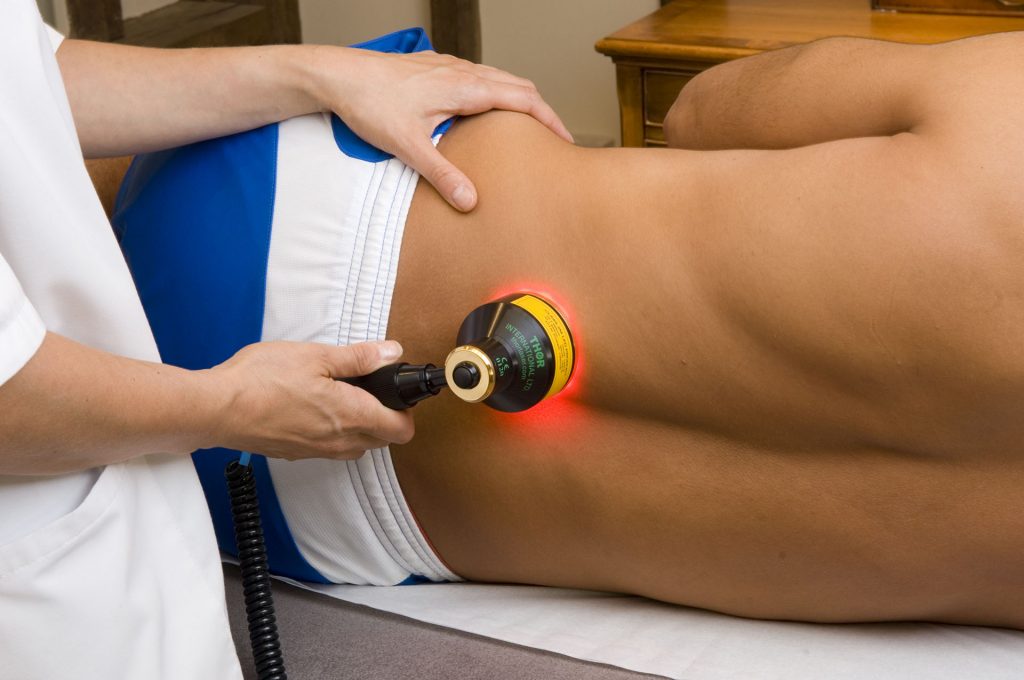
 New research shows that patients seeing a chiropractor for chronic low back pain could experience significantly better outcomes, including less pain, improved movement and better quality of life, when spinal manipulation is combined with laser therapy and exercise.
Low back pain is one of the most common reasons people in the UK visit their GP, take time off work or quietly soldier on in discomfort. If you’ve been putting up with nagging back pain for weeks, months or even years, you’re far from alone; and more importantly, there is now strong clinical evidence that the right combination of treatments can make a real, lasting difference.
At Sundial Clinics in Brighton, we regularly see patients who have tried painkillers, rest and heat packs with limited success. This article looks at what a high-quality clinical study found when researchers compared different treatment approaches for chronic non-specific low back pain, and what it means for you.
What Is Chronic Low Back Pain?
Chronic low back pain simply means back pain that has lasted longer than three months often caused by stiff spinal joints, muscle spasm or disc problems . It is, in other words, the type of back pain that most people experience.
It can be dull or sharp, constant or intermittent. It can affect your ability to bend down, sit comfortably or sleep well. Over time it can also affect your mood and mental wellbeing, something that is often overlooked in treatment. This is precisely why our team takes a whole-person approach rather than simply treating the site of pain in isolation.
What Did the Research Find?
A randomised controlled study published in the European Journal of Physical and Rehabilitation Medicine set out to answer a straightforward question: is adding spinal manipulation to laser therapy and exercise better than laser therapy and exercise alone?
330 participants with chronic low back pain were divided into three groups. One group received spinal manipulation combined with laser therapy and exercise. A second group received laser therapy and exercise only. The third acted as a control for comparison. All treatment took place over four weeks, and participants were followed up at four weeks, six months and 12 months.
The results were clear. The group that received spinal manipulation alongside the other treatments showed significantly greater improvements in every single area measured:
- Pain levels dropped more substantially
- Spinal flexibility and range of movement improved more noticeably
- Day-to-day disability was reduced to a greater degree
- Depression and low mood, a common companion to chronic pain, improved more markedly
- Overall quality of life was rated considerably higher
Crucially, these benefits were still present a full year after treatment began. This wasn’t a short-term fix. It was a lasting improvement; and it is the kind of outcome our Sundial team works hard to replicate for every patient we see.
Why Does Spinal Manipulation Work?
Spinal manipulation, the hands-on technique used by chiropractors to apply controlled, precise force to the joints of the spine, works in several ways. It helps to restore normal movement to stiff or restricted joints, reduces tension in the surrounding muscles and is thought to influence the way the nervous system processes pain signals.
When your spine moves better, you move better. And when you move better, the exercises you do at home become significantly more effective, which is precisely what this study demonstrated. Our chiropractors are trained to deliver spinal manipulation as part of a wider, coordinated treatment plan rather than as a standalone intervention, because the evidence consistently shows that combined approaches produce the best results.
Laser Therapy in Brighton: The Same Treatment Used in the Research, Available at Our Clinics
What makes this study particularly relevant to our patients is that the combination of treatments it tested, spinal manipulation, low level laser therapy and targeted exercise, is precisely what our team offers under one roof. Our chiropractors and physiotherapists work together to deliver low level laser therapy (LLLT) as a direct complement to spinal manipulation and your personalised exercise programme.
Low level laser therapy uses specific wavelengths of light to penetrate the tissue around an inflamed or painful joint, helping to reduce swelling, promote healing and ease discomfort at a cellular level. It is non-invasive, painless and takes just a few minutes per session. When used alongside hands-on spinal manipulation, as the research above clearly demonstrated, it produces significantly better outcomes than either treatment used in isolation.
At our Brighton clinics, this is a useful addition to our care. It is a considered, evidence-led part of how our chiropractors and physiotherapists approach chronic back pain together, informed by the same body of research that guided the study described in this article.
The Role of Home Exercise: Why What You Do Between Appointments Matters
One of the most important things the Sundial team will tell you is that your recovery doesn’t stop when you leave the clinic. Targeted home exercise is a cornerstone of lasting relief from chronic back pain; and the research backs this up unequivocally.
Exercise was part of every treatment group in the study, and the group that combined it with spinal manipulation and laser therapy saw by far the best results. Think of it this way: spinal manipulation unlocks movement and reduces pain, laser therapy supports tissue healing, and exercise builds the strength and flexibility to keep those gains going between appointments and long after your treatment course has finished.
The exercises we recommend are tailored specifically to your condition, your lifestyle and your goals. They are not generic gym routines pulled from a leaflet. They are precise, purposeful movements chosen by practitioners who understand your specific presentation; and they are designed to compound the benefits of everything else you are doing in the clinic.
Here’s our video on the top three exercises for back pain.
What Can a Chiropractor Do For You?
At our Brighton clinics, our chiropractors and physiotherapists work as a close-knit team. Our practitioners communicate with one another, share clinical notes and collaborate on your treatment plan from the outset. This kind of joined-up care makes a meaningful difference to outcomes.
Your first appointment is a thorough consultation, not a rushed five-minute assessment, but a proper conversation about your history, your symptoms and how your back pain is affecting your daily life. We examine your posture, movement patterns and spinal function before agreeing on a personalised plan. For the majority of our chronic back pain patients, this plan will include spinal manipulation, targeted home exercise and, if appropriate, low level laser therapy, exactly the combination that the research above found to deliver the most significant and lasting results.
The Bottom Line
The evidence is increasingly clear: for people living with chronic low back pain, spinal manipulation combined with low level laser therapy and targeted exercise produces significantly better outcomes than any of those treatments used alone. The benefits are not merely short-term; they hold up over a full 12 months of follow-up.
At our Brighton clinic, our chiropractors and physiotherapists deliver exactly this combination, working together as a coordinated team with the expertise and the tools to back it up. If you’ve been living with back pain and haven’t yet explored what integrated chiropractic and physiotherapy care can offer, now is a very good time to find out.
Book your initial consultation today and take the first step towards a life with less pain.
Frequently Asked Questions
What is low level laser therapy and how does it work? Low level laser therapy (LLLT), also known as photobiomodulation or biophotomodulation, is a treatment that uses specific wavelengths of red and near-infrared light to stimulate healing within the body’s tissues. Unlike surgical lasers, it produces no heat and causes no tissue damage. Instead, it works at a cellular level by stimulating the mitochondria, the energy-producing structures within your cells, to function more efficiently. This accelerates the body’s natural repair processes, reduces inflammation and helps to ease pain. It is completely painless, takes just a few minutes per session and has a well-established body of clinical research supporting its use in musculoskeletal conditions.
What is the difference between photobiomodulation and low level laser therapy? They refer to the same treatment. Low level laser therapy (LLLT) was the term used in earlier research and is still widely recognised. Photobiomodulation (PBM) or biophotomodulation is the more precise scientific term now preferred in clinical literature, as it better describes the mechanism of action; the use of light to drive biological change. At our Brighton clinic we use both terms interchangeably, and your practitioner will be happy to explain exactly how the technology works and why it is being recommended as part of your treatment plan.
Is spinal manipulation safe? Yes, when carried out by a trained and regulated chiropractor, spinal manipulation is considered a safe and well-tolerated treatment. Your chiropractor will always carry out a thorough assessment before proceeding to confirm that it is appropriate for your specific condition and circumstances.
How many sessions will I need? This varies from person to person and depends on the nature and duration of your symptoms. The study described in this article used a four-week treatment period as its foundation, with measurable benefits continuing to build over 12 months. Many of our patients begin to notice improvement within the first few sessions. Your practitioner will discuss a realistic treatment timeline with you at your initial consultation.
Can spinal manipulation help with more than just pain? Yes, and this is one of the most important findings from the research. Participants who received spinal manipulation showed improvements not just in pain levels but in spinal flexibility, ability to carry out daily activities, mood and overall quality of life. Treating the spine well has wide-ranging benefits that extend well beyond the back itself.
Is laser therapy safe? Are there any side effects? Low level laser therapy is widely regarded as safe when administered by a trained practitioner. Because it uses non-thermal, low-intensity light, it does not damage tissue and produces no burning sensation. Some patients notice a mild, temporary increase in discomfort immediately after their first session as the tissue responds to treatment; this is normal and settles quickly. Your practitioner will advise you on any specific considerations relevant to your case.
Do you offer laser therapy at your Brighton clinic? Yes. Our physiotherapists use low level laser therapy as part of an integrated treatment approach for chronic back pain. As the research described in this article demonstrates, combining laser therapy with spinal manipulation and exercise produces significantly better results than any single treatment alone. It is available as part of your personalised treatment plan following your initial assessment.
Do I need a GP referral to see a chiropractor in Brighton? No. You can book directly with our clinic without a referral. If we identify anything during your assessment that requires input from your GP or another specialist, we will communicate with them on your behalf.
This article is based on: Chandra S et al. “Spinal manipulation combined with laser therapy is more beneficial than laser therapy alone in chronic non-specific low back pain: a randomized controlled study.” Eur J Phys Rehabil Med. 2018 Apr 24. View on PubMed
About Matthew Bennett, Chiropractor Brighton
Matthew Bennett is the founder and principal chiropractor at Sundial Clinics Brighton, established in 1991. With over 35 years of clinical experience, Matthew qualified from the Anglo-European College of Chiropractic in 1987 and served as President of the British Chiropractic Association for four years. As a Fellow of the Royal College of Chiropractors and former team chiropractor for Brighton and Hove Albion FC and the British Alpine Ski Team, Matthew combines evidence-based chiropractic treatment with sports performance expertise. His authority in musculoskeletal health has been recognised through national media appearances, expert witness roles and contributions to professional publications. Matthew’s commitment to clinical excellence ensures patients receive the most effective chiropractic care in Brighton.